
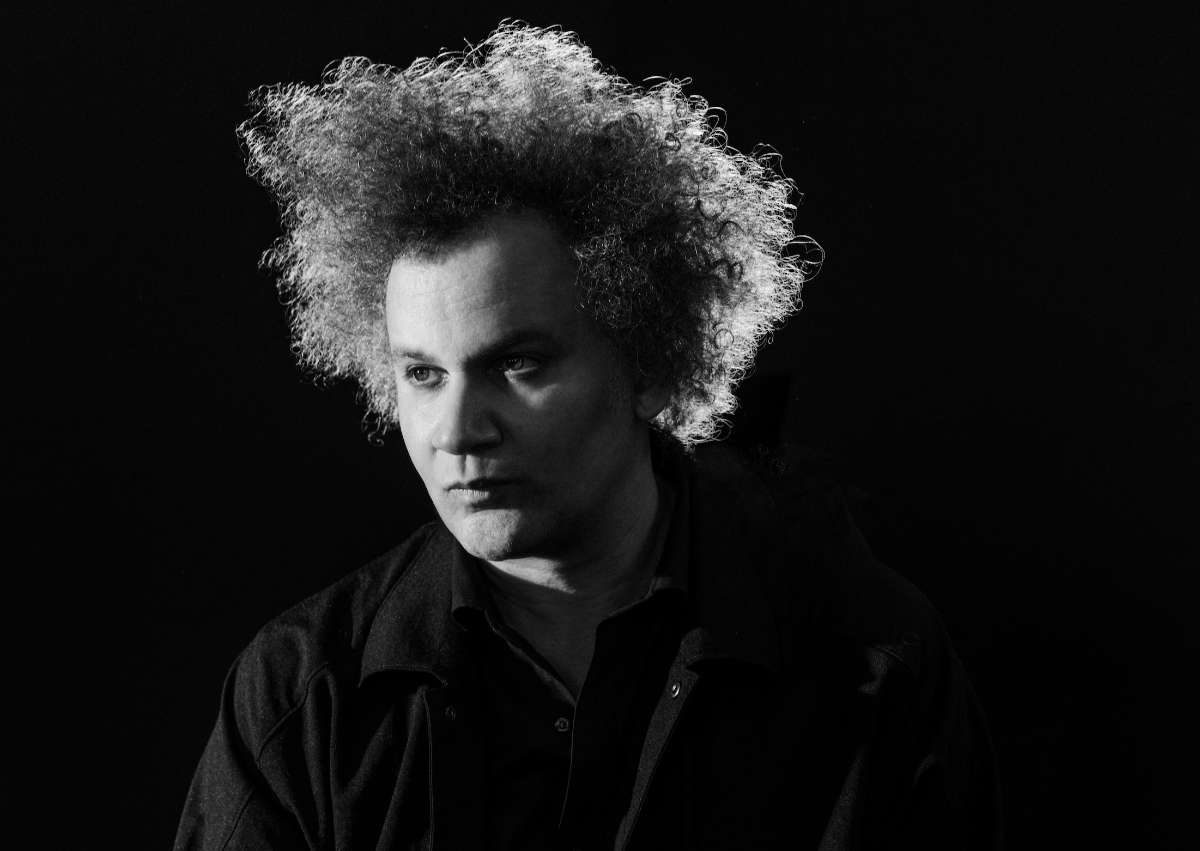
Tyondai Braxton
Splayed Werks
(Erased Tapes)
By Piotr Orlov
“My philosophy on releasing music has changed a lot, but also my idea of what it means to be an artist. The important part of the artist’s job is to archive what you’re doing—what you’re excited about, what you’re dealing with, what you’re reacting against—putting that in a form that documents your life… At the moment, we’re all looking out into the world, dealing with the helplessness in a time of war, media over-saturation. What’s the role of the artist in that? I think the archiving of any particular creative idea in the moment is one of the most significant things an artist can do now. Things I previously thought were important—’this piece means so much to me,’ or ‘listen to how this chord arrived’—are actually much less so.”
Even at first blush, Splayed Werks, Tyondai Braxton’s fifth album, his first full-length release since the recording of his 2018 symphonic work, Telekinesis, reveals itself as unlike what came before and marks the beginning of a new chapter with UK label Erased Tapes. First off, there’s a lot more music here, 70+ minutes of pure electronics and sound design. Plus, it’s divided in a way that’s out-of-step with the longer forms the 47 year-old composer/producer has previously imagined into being. Of the album’s 15 tracks, more than two-thirds are sub-five minutes.
The album brings together mostly newer works alongside pieces composed across the past decade, some of which appeared previously as standalone releases. To fully represent the scope of this period, Braxton incorporates the Dia / Phonolydian (2022) and Multiplay (2023) singles into Splayed Werks, foregrounding the project’s long-form compositional arc. Along with “Salt Point” and previously unreleased commissioned works such as “4 Zones” (2018) and “K Space” (2021), these pieces were always part of a broader, evolving body of material. Here, they are re-edited as newer versions and remastered by the excellent Matt Colton at Metropolis Studios in London and woven into a continuous narrative. The result is not so much a compilation, but a record that traces its own lineage in real time: a body of work composed across years, now fully realized as a single, cohesive statement.